Attendees of the Peel CAMHS clinic will be captivated by a new artwork donated following our recent Dandjoo Kooliny event.
The artwork was developed as part of a Healing Kids, Healing Families and Embrace-led research project looking to build cultural safety into mental healthcare for Aboriginal and Torres Strait Islander children and families.
One of the key findings from this MRFF-funded research was that visual representations of culture such as artwork and flags are necessary to foster trust and prompt cultural safety in mental healthcare settings.
The artwork was completed during Embrace’s Dandjoo Kooliny (Coming Together) event at WA Museum Boola Bardip’s Hackett Hall in October. Attendees painted the canvas under the direction of Nan Catherine Bydner, a respected Elder and advisory group member on the project, alongside her daughter Gertrina Hayden.
In the spirit of Dandjoo Kooliny, the donation of the artwork to the Peel office brought together representatives of The Kids, CAMHS and the project advisory groups to mark the unveiling and have a yarn about the stories that inspired it.
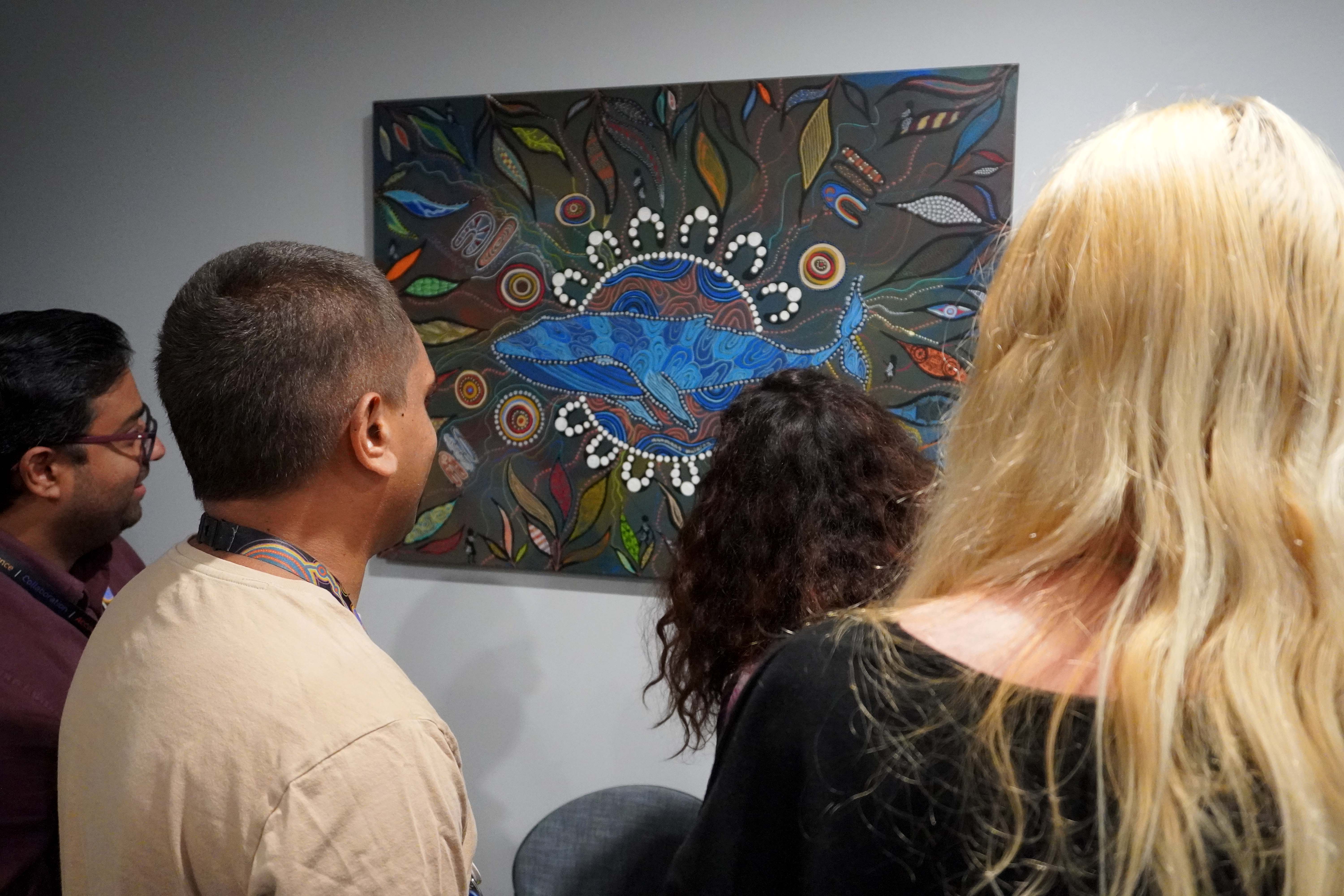
CAMHS staff admiring the new painting
Staff described the art as ‘beautiful’, ‘powerful’, and ‘something which tells a story’, with its presence contributing to the service’s support for the cultural safety of its clients.
Thomas Betts, an Aboriginal Project Officer who worked on the cultural safety project, labelled the artwork a “truly special piece”.
“Everyone involved in its creation is working to strengthen the mental health and wellbeing of our young people,” he said.
“It’s been clear that artwork and a sense of belonging are still missing in many spaces. Being able to gift this artwork feels like a full-circle moment, where we’re not only identifying gaps but actively supporting services to put change into practice for something that has been challenging in the past.”
Embrace is supported by Principal Partner Rio Tinto and Channel 7 Telethon Trust.
Below is the story of the findings of the Building Cultural Safety in Mental Health Services for Aboriginal and Torres Strait Islander Children, Young People and Families, as told through the artwork.
The blue whale represents the meeting place where attendees of Dandjoo Kooliny (Coming Together) joined together, gathering under Otto the blue whale, whose bones hang in Hackett Hall at WA Museum Boola Bardip. Water, a natural source of healing and clearing our minds surrounds the whale, with the brown lines inside the whale symbolising the brain. Extending outwards are lines that connect community, exploring how brainwaves can become entangled and chaotic and cause emotions such as sadness and anxiety. By connecting these lines at the place of meeting, the story represents healing and support for people going through their mental health journey.
Among the leaves are symbols representing males and females, highlighting that mental health affects everyone. Surrounding the whale are circles representing the Aboriginal principles of social and emotional wellbeing: mind and emotions, body, community, spirituality and ancestors, country, culture, and family and kinship.
The original healing tree is represented by the leaves, showing strength, support, and resources for the community, all held together in a safe space. Each leaf was also completed by an attendee of the event, reflecting that although we walk different paths, those paths can come together in support of cultural safety and mental health: Dandjoo Kooliny.
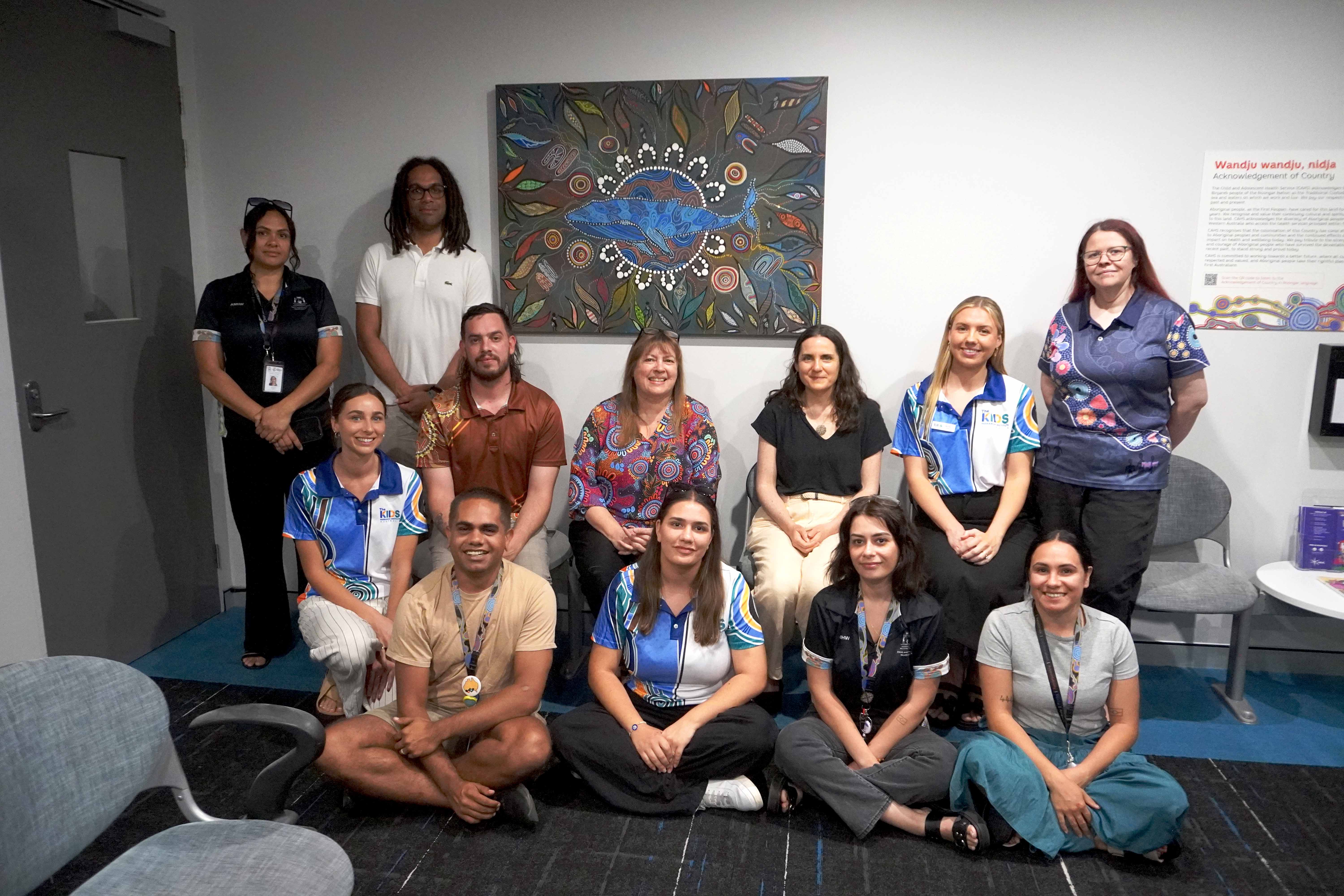
Staff from HKHF, Embrace and CAMHS alongside the painting
First published Wednesday 17 December 2025.
View all news articles