Noonakart Moodijabiny (or ‘Everyone Becoming Strong’) illustrates the history and growth of Aboriginal parenting, with the importance of connection to culture, Country and family a consistent theme.
Created by artist Ronda Clarke, Noonakart Moodijabiny was developed during the launch of Aboriginal parenting program project Noonakart Moodijabiny early last year. Among those in attendance were community members, health professionals, and of course parents, who expressed eagerness to see the program under development.
Throughout the event, Ronda painted imagery of the discussions, beginning from the Welcome to Country and flowing through to the yarns with participants.
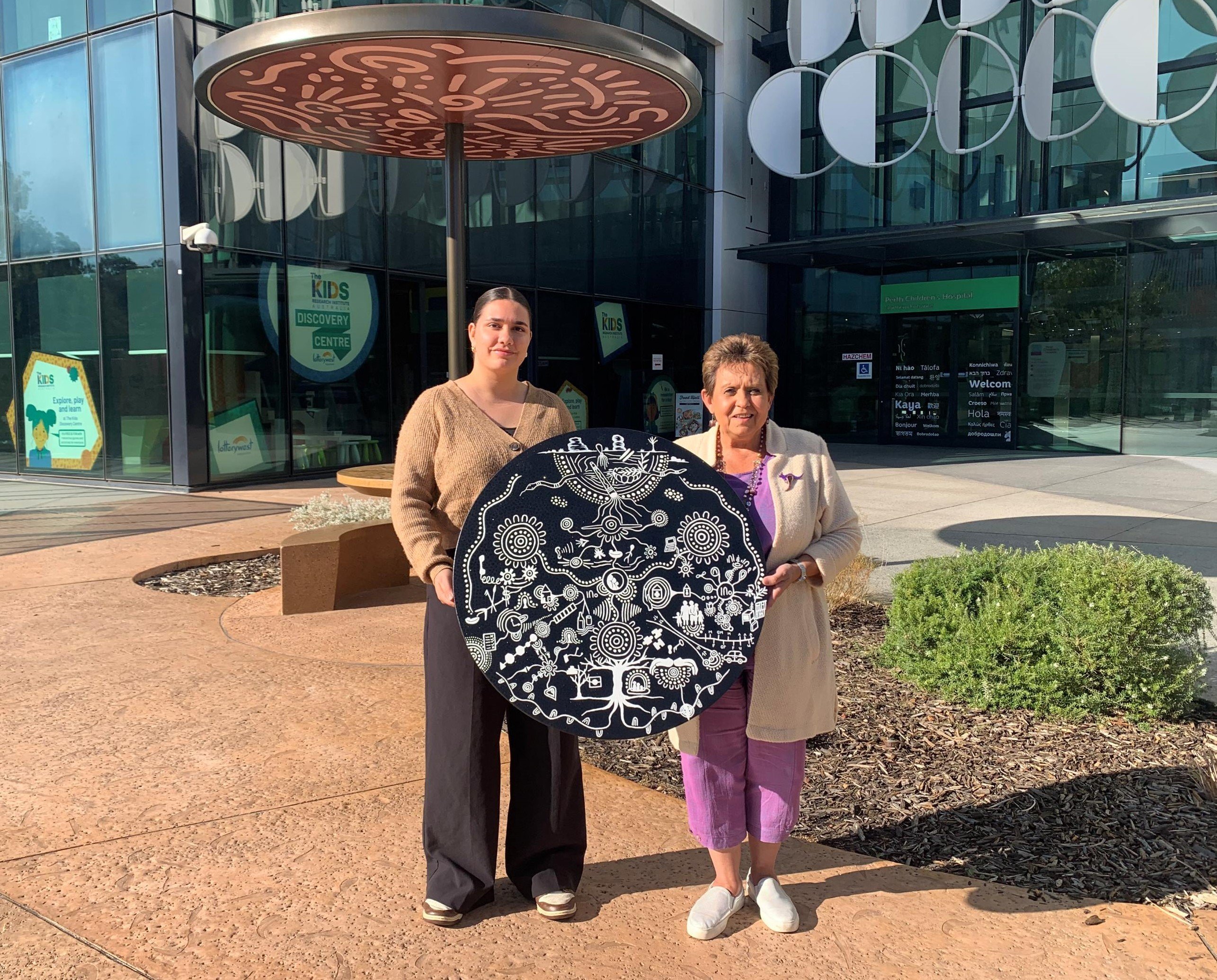
Aboriginal Project Officer Bek Morrison and Ronda Clarke holding the artwork
The artwork, now used at events and yarns as a conversation starter and showcase of the project, uses a blend of traditional and contemporary imagery to represent the feelings and experiences of Aboriginal and Torres Strait Islander parents and caregivers. Ill-fitting puzzle pieces, for instance, signify the challenges of parenting, and circles within circles represent connection to family.
Other themes which participants discussed in their yarns reflected the physical and emotional factors of being a parent, raising children, and current parenting programs. These themes are being investigated within this research project.
Some of the symbols within the artwork are broken down below:
Welcome to Country
- Spinifex grass, black sky, rocks, earth and trees: The land and sky
- A pair of tapping sticks and a shell rope shaker: The Welcome to Country was performed alongside a didgeridoo player, also represented on the left.
- A shell with gum leaves and water: This is surrounded by lines representing the sea and waterways.
- The Woggle Rainbow Serpent: Noongar dreaming and the Derbarl Yerrigan (Swan River).
- The dots and lines throughout: Aboriginal culture and the connections which are forming in the room.
Left side of art
- Different shaped wheels: The often confusing experience parents can feel trying to fit different components together.
- Boomerang with spears: Strong connection to culture, which participants felt they didn’t receive when they were taken away from their families
- A head outlined by a line and dots: An exhausted parent, feeling as if they have let their children down; also an individual’s social and emotional wellbeing.
- A medium circle attached to a small circle, then an octagon, hexagon and then a triangle: The disconnect of walking down a path that isn’t connected to family and culture. Parenting is hard and everyone is learning as they go.
Bottom of the art, showing the tree
- The tree of life symbolises parenting: It grows, feeds, nurtures itself, strives to live and builds within its’ environment.
- The two lines extending from the roots of the tree: The connections to families, parents, different parenting styles, advice and advocacy. There are many bumps and curves in the road, but we learn as we grow.
- The tree trunk: The strength of parents, holding on and keeping everyone tall and on track.
Right side of art
- The hospital inside several circles with a hand: Multiple kinds of care and supports available in the hospital system.
- A circle with an upside-down U shape: Parents can often feel alone.
- A book with circles and lines: Some parents feel like they don’t have the skills and they are winging it, wishing there was a book with instructions.
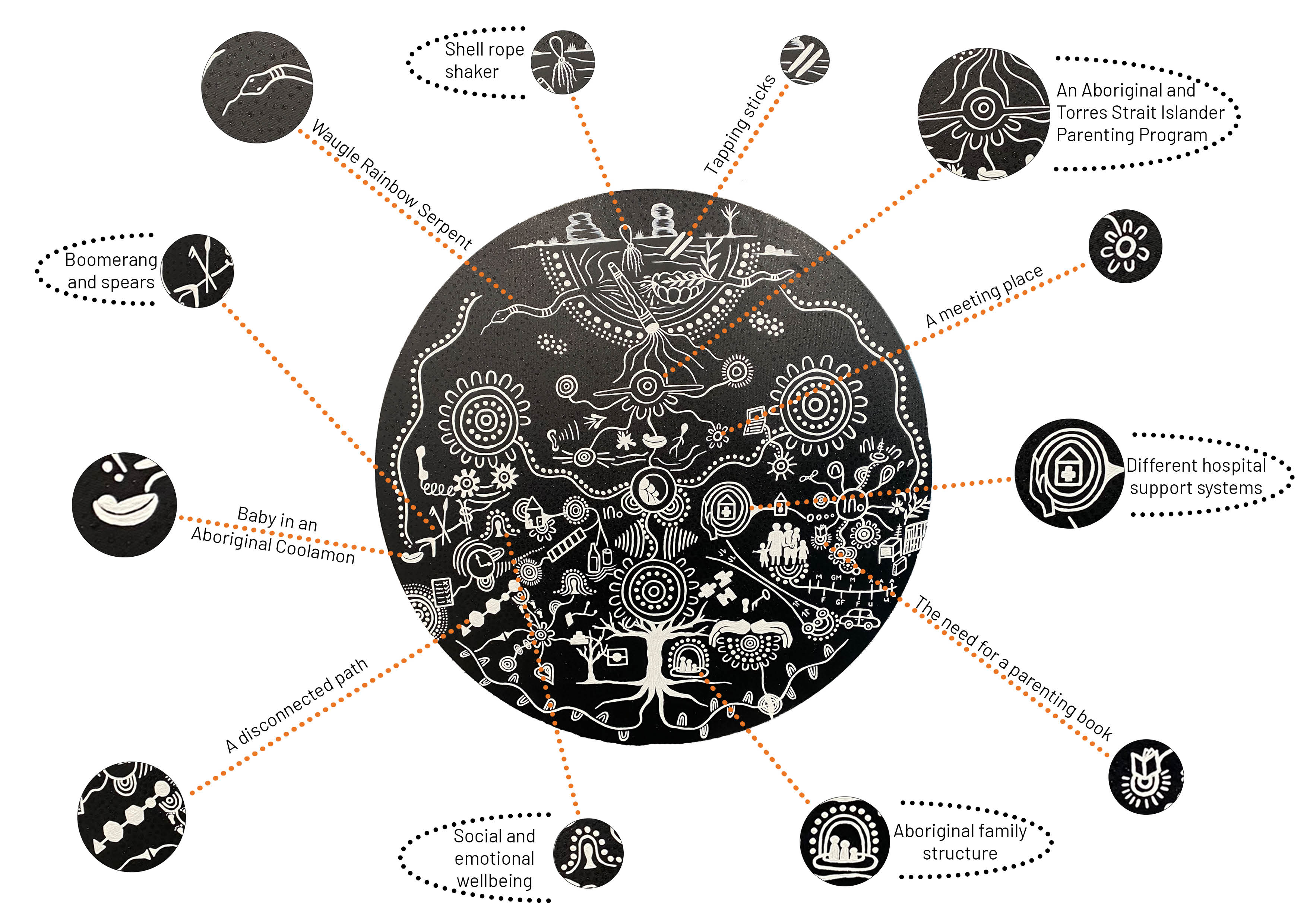
Noonakart Moodijabiny with labelled examples of the symbols
Embrace is supported by its principal partner, Rio Tinto, and Channel 7 Telethon Trust.
First published Tuesday 27 January 2026.
View all news articles